How to brew specialty coffee at home
Good coffee is not a talent. It is four variables, and once you can name them you can fix any cup that comes out wrong. This guide walks through all four, then through the four ways of brewing you are most likely to have on your counter.
No equipment you do not already own. No scales required, though they help. Fifteen minutes of reading that should outlast the bag it came with.
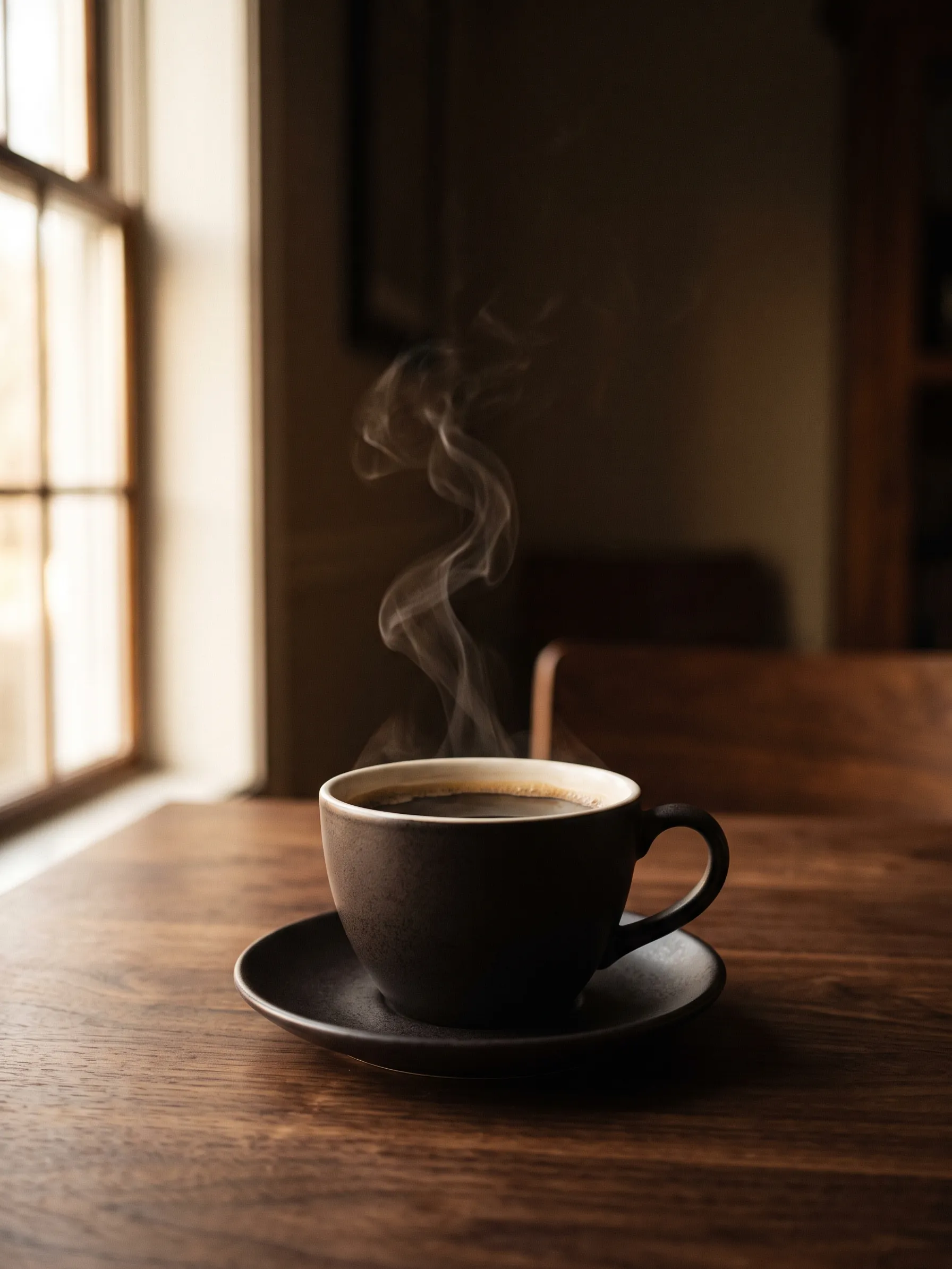
Four things decide how it tastes
Everything else — the gear, the technique, the ritual — is a way of controlling one of these four. Change one at a time and you will always know what did what.
The beans
Freshness beats everything. Coffee is at its best from about four days to four weeks after roasting, and no technique rescues a bag that has been open since spring.
The grind
The single biggest lever you control at home. Grind size decides how fast water can take flavour out of the coffee, which is the whole game.
The water
Your cup is about 98% water. Temperature sets how aggressively it extracts; mineral content decides how much flavour it can even carry.
The time
How long the two stay in contact. Too short and the cup is sour and hollow; too long and it turns bitter and drying.
Start with
good beans
Nothing downstream can add flavour that is not in the bean to begin with. Brewing only decides how much of it ends up in the cup.
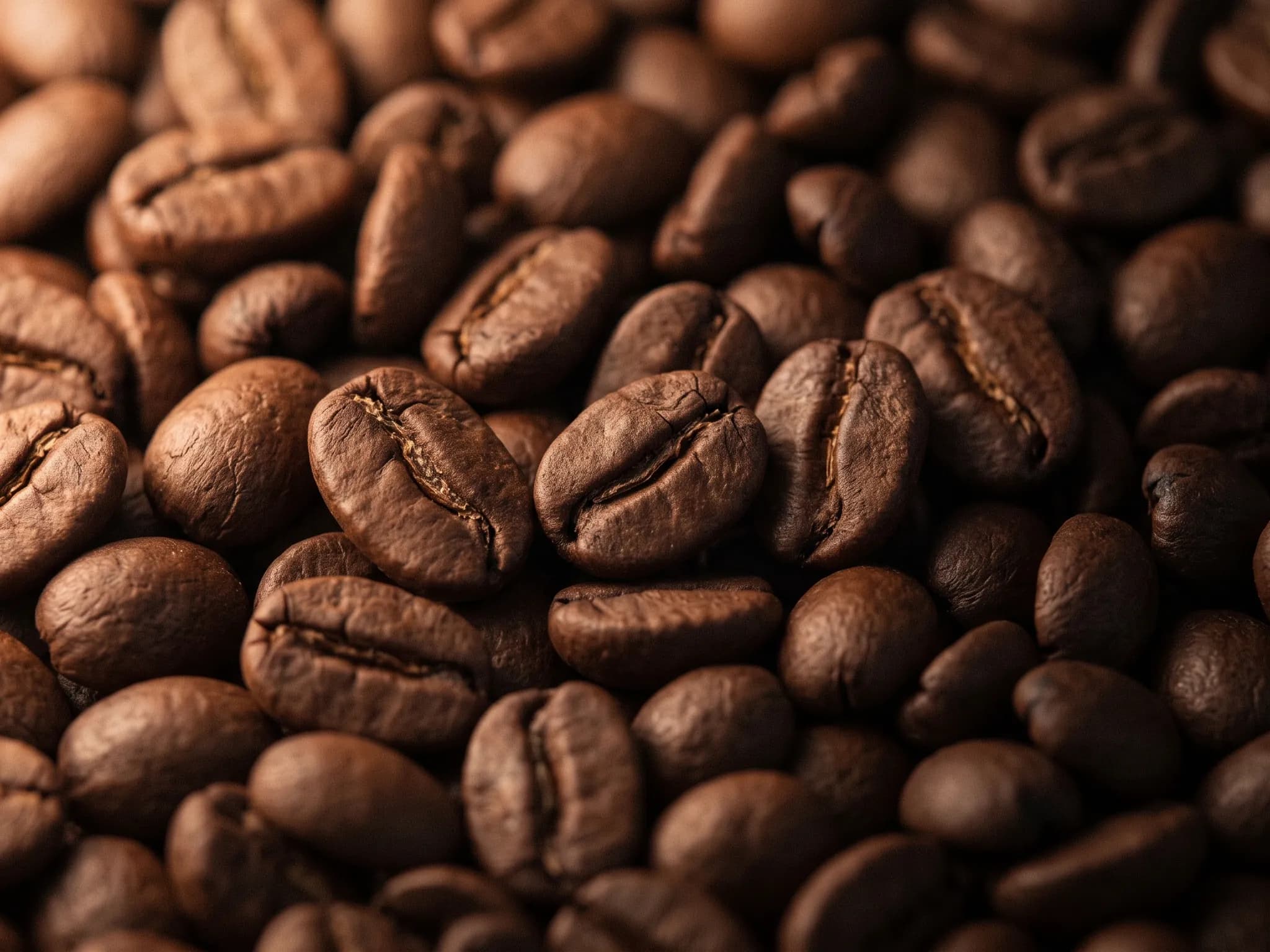
Look for a roast date, not a best-before
A best-before date two years out tells you the bag is built for shelf life, not for flavour. A roast date tells you what you actually need to know. Every Koftera bag carries one.
Grind it when you brew it
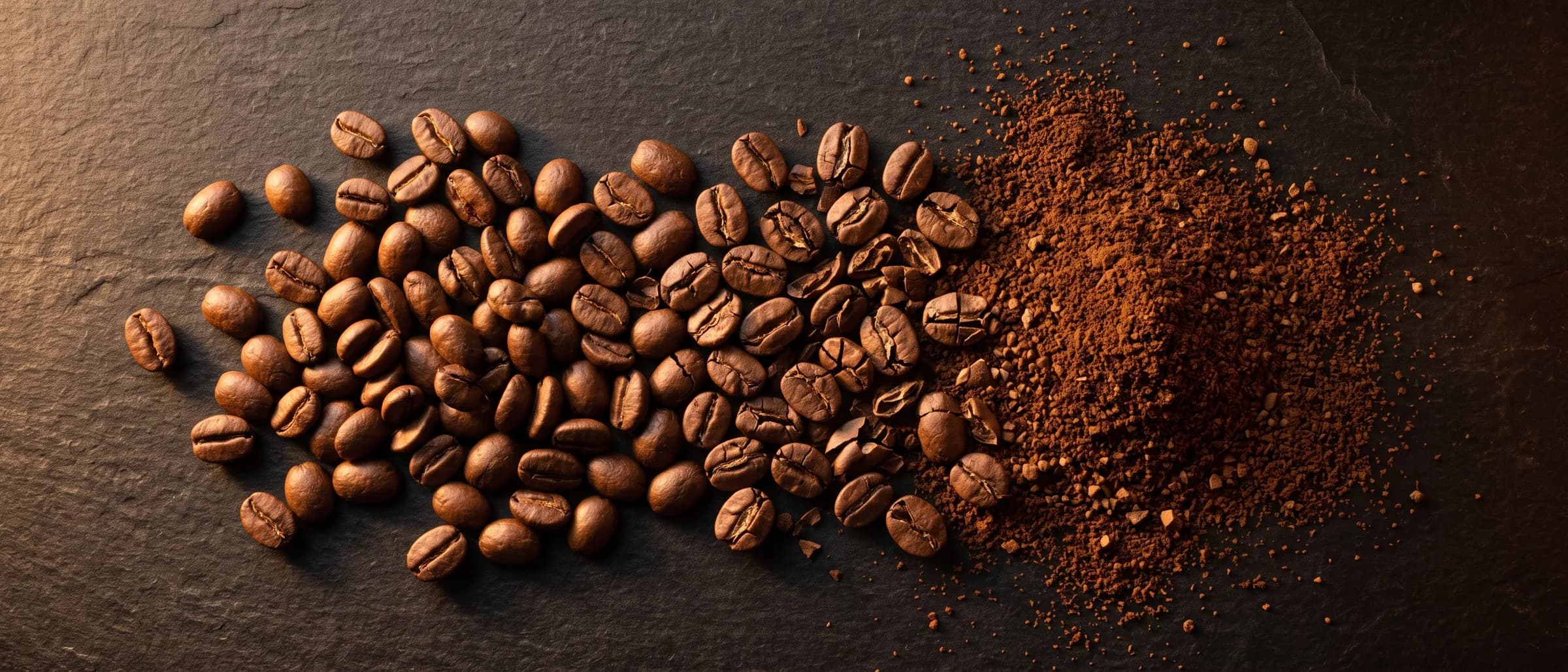
Ground coffee loses most of its aromatics within about fifteen minutes — the smell filling the room is the flavour leaving the coffee. Whole beans hold on to it for weeks.
Give a fresh roast a few days
Straight out of the roaster, beans are still releasing carbon dioxide, which pushes water away from the grounds and makes extraction uneven. Four to seven days in the bag and it settles.
If you change one thing after reading this, make it grinding your own beans. It moves the cup further than any piece of equipment you can buy.
The part nobody thinks about
A brewed cup is roughly 98% water and 2% coffee. It is worth about thirty seconds of attention.
Just off the boil
Boil, then wait thirty seconds. Water straight off a rolling boil scalds the grounds and drags out bitterness; water much below 90 °C leaves the sweetness behind.
Not distilled, not hard
Minerals are what actually bind to and carry flavour compounds, so distilled water brews a famously flat cup. Very hard water swings the other way and mutes acidity. Filtered tap water is usually right.
Never reboil
Reboiling drives off dissolved oxygen and leaves the water tasting dull and slightly metallic. It carries straight through into the cup. Start with fresh cold water each time.
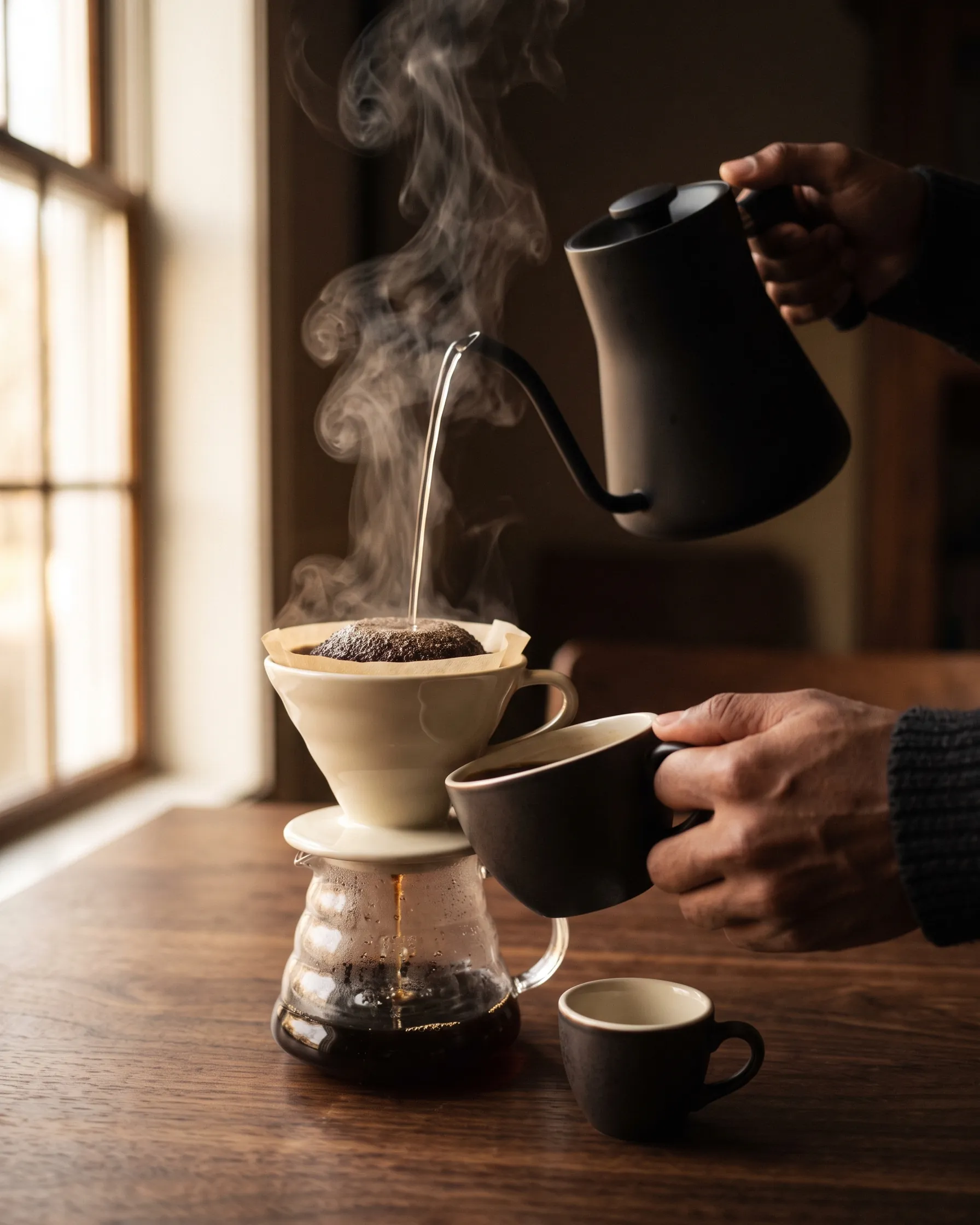
Brew it
Four methods, four sets of numbers. They all start from the same baseline — 55 g of coffee per litre of water at 93 °C — and bend it to suit how long the water and the grounds stay in contact. Shorter contact wants a stronger ratio and a finer grind; longer contact wants the opposite.
Pour-over (V60)
- Ratio
- 1:16
- Water
- 94 °C
- Grind
- Medium-fine, like table salt
- Time
- 2:30 – 3:00
- Rinse the paper filter with hot water and tip the water away — it takes the paper taste with it.
- Add the grounds, level the bed, and pour twice their weight in water. Wait 40 seconds: the coffee blooms and releases its gas.
- Pour the rest in slow circles, keeping the bed covered but never flooding it.
- The drawdown should finish around three minutes. Faster means grind finer; slower, coarser.
AeroPress
- Ratio
- 1:14
- Water
- 85 °C
- Grind
- Fine-medium, finer than sea salt
- Time
- 1:30
- Add the grounds, pour all the water at once and stir gently three times.
- Cap it and steep for one minute.
- Press slowly — about 30 seconds from top to bottom. If it fights you, your grind is too fine.
- Top up with hot water to taste. A stronger concentrate diluted after pressing gives you more control than brewing weak.
French press
- Ratio
- 1:15
- Water
- 95 °C
- Grind
- Coarse, like raw sugar
- Time
- 4:00
- Add the grounds, pour all the water, and let it stand for four minutes.
- Break the crust with a spoon and skim off the foam and floating grounds.
- Press the plunger down slowly and pour straight away — coffee left on the grounds keeps extracting and turns bitter.
Moka pot
- Ratio
- 1:10
- Water
- 95 °C
- Grind
- Fine, but not espresso-fine
- Time
- 4:00 – 5:00
- Fill the bottom chamber with hot water up to the valve. Starting hot keeps the coffee from stewing as the pot heats.
- Fill the basket level and flat — do not tamp.
- Brew on medium heat with the lid open. When the stream turns pale and starts to sputter, take it off the heat.
- Cool the base under the tap to stop extraction instantly.
- Coffee
- 31 g
- Water
- 500 ml
- Ratio
- 1:16
Based on a 250 ml cup. Weigh the coffee if you can — a tablespoon of beans varies by almost half depending on how they sit in the spoon.
The world in your cup
Origin does more to a cup than roast level or brew method ever will. Soil, altitude and the way the fruit is dried are already in the bean before anyone roasts it. These five taste nothing like each other — worth knowing which one you just liked.
Ethiopia
Yirgacheffe · Guji · Sidamo
Where coffee comes from, botanically and historically. Floral and tea-like when washed; peach and blueberry when dried on the cherry.
- Altitude
- 1,800 – 2,200 m
- Process
- Washed and natural
Kenya
Nyeri · Kirinyaga
The most acidic cup on this page, and deliberately so. Blackcurrant and tomato-leaf sharpness that makes everything else taste flat afterwards.
- Altitude
- 1,600 – 2,000 m
- Process
- Washed, double-fermented
Colombia
Huila · Nariño
The dependable middle. Caramel sweetness, red apple, enough body to survive milk without disappearing.
- Altitude
- 1,500 – 2,000 m
- Process
- Washed
Brazil
Cerrado · Sul de Minas
Low acidity, heavy body, hazelnut and cocoa. The reason most espresso blends have Brazil in them.
- Altitude
- 900 – 1,200 m
- Process
- Natural and pulped natural
Guatemala
Antigua · Huehuetenango
Volcanic soil and cool nights. Dark chocolate and baking spice with a clean, dry finish.
- Altitude
- 1,500 – 1,900 m
- Process
- Washed
When it tastes off
Almost every bad cup is one of three problems, and each has one obvious direction to move in. Change a single variable, brew again, taste.
Sour, thin, finishes too fast
Under-extracted — the water left before it took enough with it.
Grind finer, brew hotter, or let it steep longer. Change one at a time.
Bitter, drying, harsh aftertaste
Over-extracted — the water stayed too long and pulled out the bitter end.
Grind coarser, drop the water a few degrees, or cut the brew time.
Flat and papery, nothing wrong but nothing there
Stale coffee, or water that has been boiled and reboiled.
Check the roast date on the bag and start with fresh cold water.
Making the bag last
Coffee does not spoil in a way that will hurt you. It just quietly stops being interesting. Slowing that down costs nothing.
Airtight, opaque, room temperature
Oxygen, light and heat are what turn coffee stale. The bag it came in, rolled down and clipped, beats most dedicated canisters.
Keep it out of the fridge
A fridge is humid and full of smells, and coffee takes on both. Every time you take the bag out, condensation forms on cold beans.
The freezer, only properly
Freezing works if you portion the coffee first, seal it airtight and brew each portion straight from frozen without thawing. Repeatedly freezing and thawing one bag does more harm than leaving it on the counter.
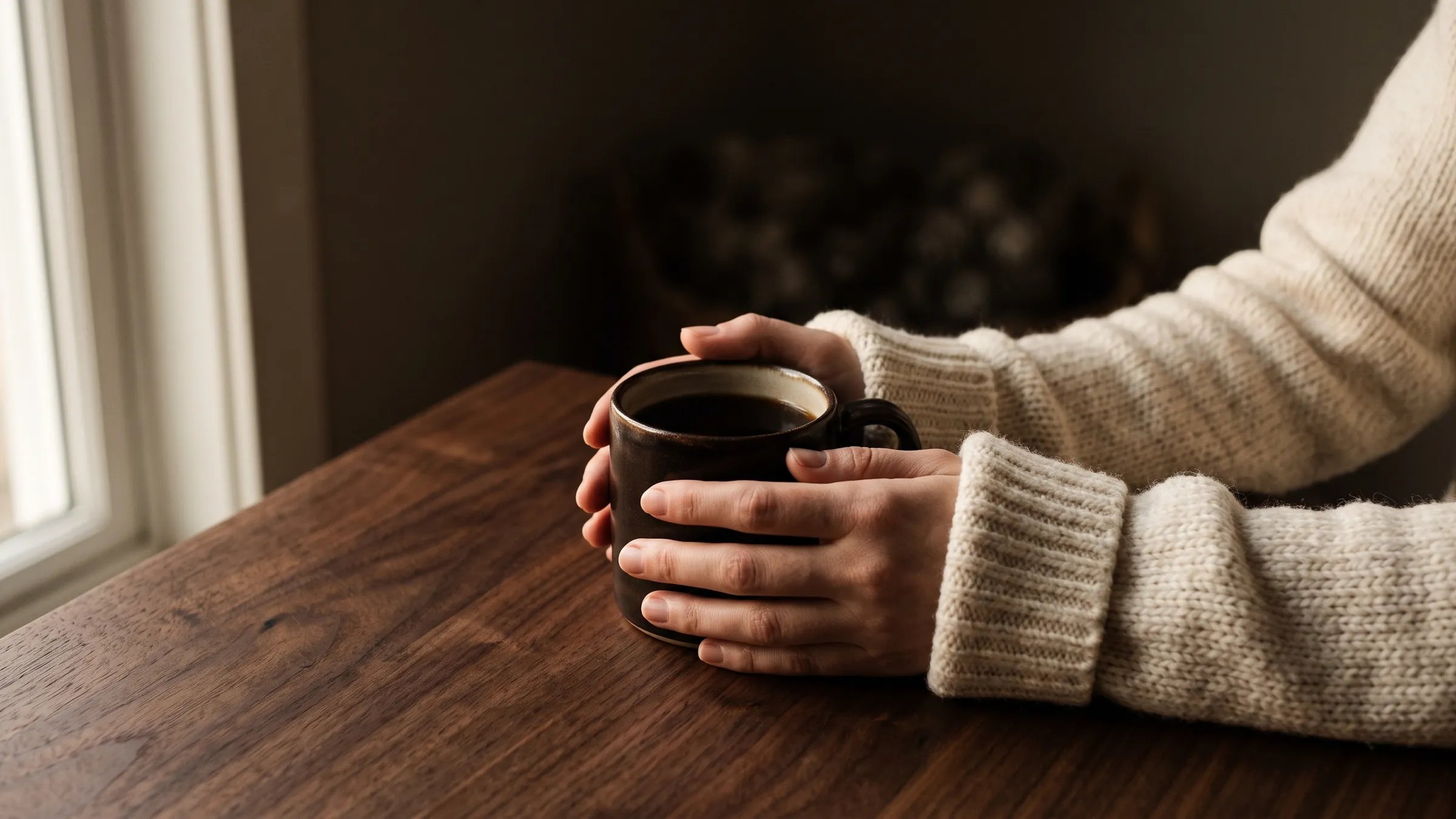
Then stop measuring
All of this exists to get you to a cup you like, and then to get out of the way. Once a method works for you, it takes four minutes and no thought at all.
Keep the numbers for the mornings when something tastes wrong and you want to know why.
This guide ships in every Koftera gift, with the giver’s logo and greeting on it. Specialty coffee from European roasters, your branding, hand-assembled in Prague.